- Social Fuel Newsletter
- Posts
- Why Most People Quit LinkedIn Before They See Results!
Why Most People Quit LinkedIn Before They See Results!
And How You Can Push Through

Kevin Box
December 07, 2025
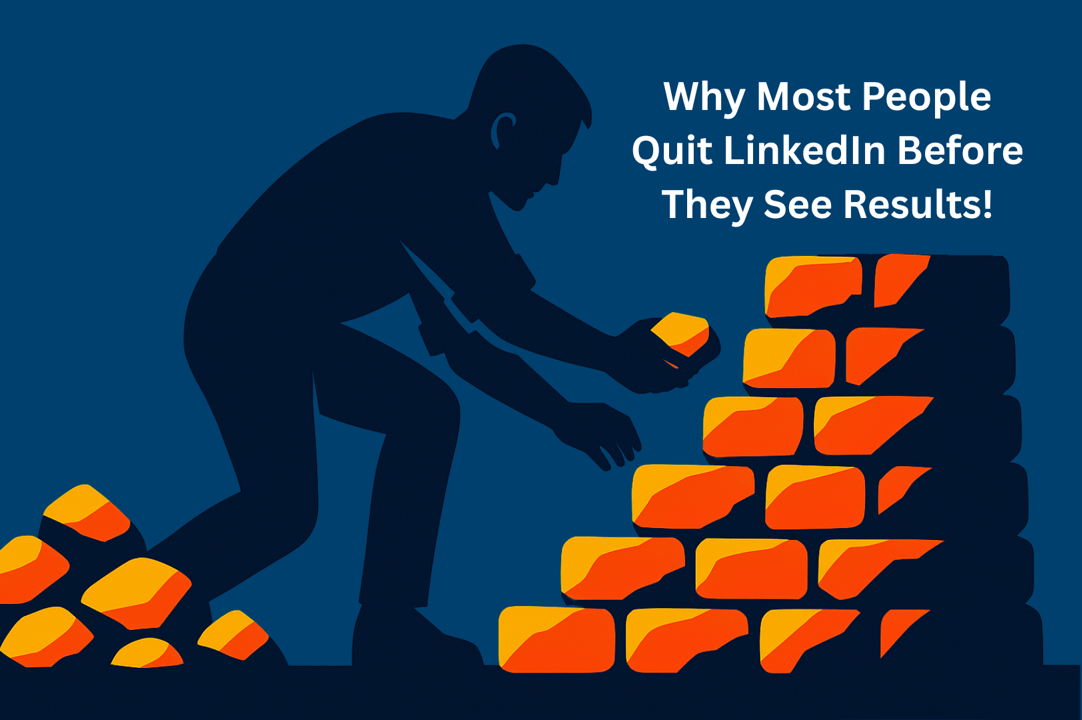
Most people will never reach 10,000 followers on LinkedIn, not because they lack talent, but because they quit too soon.
I watch it happen constantly. Someone commits to building their LinkedIn presence. They optimize their profile. They start posting consistently. They engage with others' content. For a few weeks, maybe even a couple months, they show up with genuine effort and enthusiasm.
Then the doubt creeps in.
Their posts get modest engagement. Growth feels slow. The effort doesn't seem to match the results. They see other creators appearing to skyrocket while they're stuck in neutral. Eventually, they stop posting. The profile goes quiet. Another abandoned LinkedIn journey joins the graveyard of unrealized potential.
Here's what they don't understand: they quit right before the breakthrough.
The Valley of Disappointment: Where Most Creators Give Up
Success on LinkedIn follows what's called the Latent Potential Curve, sometimes known as the Valley of Disappointment. This concept explains why most people give up just before they break through, and understanding it might be the most important thing you learn about building authority on any platform.
Here's how it works.
You start with high motivation. You're excited, committed, and full of ideas. You've optimized your profile. You've planned your content strategy. You hit publish on your first few posts with genuine enthusiasm, expecting to see momentum build quickly.
Then reality sets in. You post for weeks or months with little traction. Growth is slow. Engagement is inconsistent. Some posts get a few likes and maybe a comment or two. Most barely register. The gap between the effort you're putting in and the results you're seeing feels massive and demoralizing.
You start to feel like your effort isn't paying off. Doubt creeps in and you begin to wonder, "Is this even worth it? Maybe LinkedIn just isn't for me. Maybe I don't have what it takes. Maybe my content isn't good enough."
This is where most people quit, right here in the valley. They interpret slow growth as evidence they're not good enough and their content doesn't resonate, that LinkedIn isn't the right platform for them. They assume that if it were going to work, they'd be seeing results by now.
But here's what they don't see happening underneath the surface, invisible to vanity metrics: critical work is being done. You're refining your voice and learning what actually resonates versus what you thought would resonate. You're training the algorithm by teaching LinkedIn what topics you cover and who should see your content. You're building the foundation that makes everything else possible. If you push through this phase, something truly magical happens.
“If you push through this phase, something
genuinely powerful happens.” - Kevin Box
You refine your voice and start creating content that people genuinely value, not just consume. Your engagement improves as more people recognize your expertise and begin to associate your name with specific insights. You begin developing your synergies who help push your posts through the initial algorithm barriers. LinkedIn rewards your persistence, giving your posts progressively more reach as you demonstrate consistent, quality output. Most importantly, the compounding effects of consistency kick in where your old posts continue to attract new followers, your reputation builds across multiple touchpoints, and your network effects multiply. You start to build a following of people who look froward to reading yore content.
The difference between failure and success is whether you stick around long enough to see the compounding effects of consistency. It's not that successful creators never felt discouraged. They kept posting through the discouragement because they normalized the valley as part of the process rather than evidence of inadequacy.
The Psychology of Quitting: Why We Underestimate What it Takes to Be Successful.
Quitting is a psychological phenomenon deeply tied to frustration, impatience, and unrealistic expectations. We chronically underestimate the time and effort required to achieve meaningful success, especially in a competitive environment where everyone seems to be posting, growing, and winning.
Creators watch others skyrocket in growth and assume it happened overnight. The reality is those people spent months or years refining their content strategy, learning from mistakes, and adapting to LinkedIn's ever-changing algorithm. The visible success is the tip of an iceberg built on months of invisible work that nobody sees.
We also tend to overestimate what we can achieve in the short term and underestimate what we can achieve in the long term. You think you'll have 5,000 followers in three months, and when you don't, you assume you're failing. But you're not failing because you're exactly where you should be. The followers, the engagement, and the opportunities are coming, but they're on a different timeline than your expectations.
The real challenge isn't about posting great content but about staying in the game long enough to see results. This requires a psychological reframe that most people never make. When you expect the valley, you don't quit when you encounter it because you recognize it as confirmation that you're exactly where you need to be.
The Right Approach: Quality Over Quantity
A common mistake new creators make is posting too much, too fast. They see advice about daily posting, interpret it as a mandate rather than an option, and burn themselves out trying to maintain an unsustainable pace. They get overwhelmed by the constant demand for new ideas and quit before they've built a sustainable workflow.
This is entirely preventable.
Instead, start slow and steady by building a rhythm you can maintain indefinitely, then scale from there. Post only twice a week at first, not five times and not daily. This frequency is sustainable even for the busiest professionals, low enough that it doesn't feel overwhelming and high enough that you maintain visibility and momentum.
Focus on quality over quantity and make those two posts count. Spend real time on them. Refine the hook. Sharpen the insights. Polish the call to action. Learn what resonates with your audience before increasing frequency.
After two months of twice-weekly posting, you'll have 16 to 20 posts worth of data. Patterns will emerge and you'll start to see which topics, formats, and angles resonate most strongly. This is your roadmap for scaling.
The psychological benefit of starting slow is profound. You never feel like LinkedIn is dominating your life. You maintain your day job, your client work, and your family time. LinkedIn becomes a sustainable practice, not a consuming obsession. This sustainability is what allows you to stay in the game long enough to see results.
The creators who burn bright and fast inevitably burn out. The ones who start slow and steady are still posting two years later, reaping the compounding benefits.
Engage More Than You Post
Here's the insight that most new creators miss: in the beginning, commenting thoughtfully on industry leaders' posts grows your audience faster than creating your own content.
Your comments get visibility by appearing in feeds of everyone who follows that post. This helps you grow without creating daily content, leveraging other people's audiences to build your own. It's strategic, efficient, and relationship-focused.
This approach also builds relationships that make people more likely to engage with your posts when you do publish. When someone sees your thoughtful comment on a post they also engaged with, they recognize your name. When you later publish your own content, they're more likely to stop scrolling and engage because you're no longer a stranger but someone they've seen adding value to conversations they care about.
Aim for five to ten meaningful comments per day, not "Great post" or generic praise, but substantive comments that add insight, ask thoughtful questions, or share relevant experiences. These comments position you as a peer, not a fan, building your authority even when you're not publishing your own content.
This is the secret that lets you maintain visibility and growth while posting infrequently. You're active on the platform daily, but you're not creating content daily.
Your Anti-Burnout Strategy
If LinkedIn feels overwhelming, scale back instead of quitting. It's better to post once a week consistently than to post daily for a month and then disappear for three months. Consistency beats intensity every time.
Choose just two days to post and focus on writing strong content. Protect these days. Block the time. Treat it like a client meeting. But don't let LinkedIn bleed into every other day by keeping it contained. This containment is what makes it sustainable long term.
Engage with five creators daily, which takes 15 to 20 minutes. You're not spending hours scrolling but being strategic and intentional. Find five posts from creators in your niche or adjacent niches and leave thoughtful comments. This maintains your visibility and builds relationships without requiring you to create content daily.
Repurpose your best post into another format every week. Take the post that got the most saves or generated the best conversations and turn it into a carousel, transform it into a poll, or record a short video explaining the concept. This gives you additional content without additional ideation.
Analyze your past five posts to find what performed best and create more of that. Look at your last five posts and identify which one got the most profile visits, which one generated the most meaningful comments, and which one led to DMs or discovery calls. Create another post in that same vein, then another. You're building on success rather than randomly hoping for it.
Give yourself permission to slow down because LinkedIn is a marathon, not a sprint. The creators who win aren't the ones who explode out of the gate but the ones still posting two years later. Pace yourself accordingly. There's no prize for burning out and no award for unsustainable hustle. The only metric that matters is: are you still here, still posting, and still showing up?
The Compound Effect: Why Persistence Wins
Everything we've discussed only works if you persist long enough for compounding to take effect. Compounding is the most powerful force in business, but it requires time to manifest.
Your first ten posts won't make you famous, but they'll teach you what resonates. Your first hundred connections won't transform your business, but they'll form the foundation of your network. Your first three months of consistent posting won't generate a flood of inbound leads, but they'll establish your presence and train the algorithm. All of this is invisible work that sets up visible success later.
The creators who dominate LinkedIn aren't necessarily more talented than those who quit. They're just still here. They pushed through the valley of disappointment. They maintained consistency when results were modest. They adapted when things stopped working. They stayed in the game long enough for compounding to kick in. Now they're reaping benefits that seem disproportionate to their current effort because those benefits are built on months or years of accumulated momentum.
When you focus on building genuine authority through consistent value delivery rather than chasing viral moments, you build something sustainable. Authority compounds while virality doesn't. A viral post gives you a spike, but authority gives you a platform. Authority takes longer to build, but once established, it's far more resilient and valuable than any temporary attention surge.
Your Breakthrough Is Closer Than You Think
Most people quit LinkedIn before they see results, but the people who persist are the ones who win. You don't need to post every day and you don't need overnight success. You just need to keep showing up, adapting, and improving.
The valley of disappointment you're in right now isn't evidence of failure but evidence that you're exactly where every successful creator has been at some point.
Stay the course because your LinkedIn breakthrough is closer than you think, not because success is easy or guaranteed, but because most of your competition will quit before they get there. They'll abandon their profiles, convinced that LinkedIn doesn't work for them, never realizing they were two months away from momentum.
Don't be them. Be the stubborn one. Be the one who keeps posting when engagement is low. Be the one who adapts when something stops working. Be the one who's still here a year from now.
That stubbornness, combined with strategic execution, is your competitive advantage. You're not hoping for success but engineering it through consistent application of proven principles. You're not waiting for luck but building leverage through strategic positioning and persistent execution.
Your future self, the one running a profitable business built on LinkedIn authority, will thank you for the persistence you're showing today.
About the Author: Kevin Box helps LinkedIn creators build authority, monetize their expertise, and design freedom through strategic partnerships and thought leadership. This article is adapted from his book Synergy: Thought Leadership, Strategic Partnerships, and Your LinkedIn Brand Engine.

Spots are Limited. Register Today!!!
Reply