- Social Fuel Newsletter
- Posts
- The New LinkedIn
The New LinkedIn
Relevance, content strategy, and why most creators are losing reach!

Kevin Box
March 29, 2026
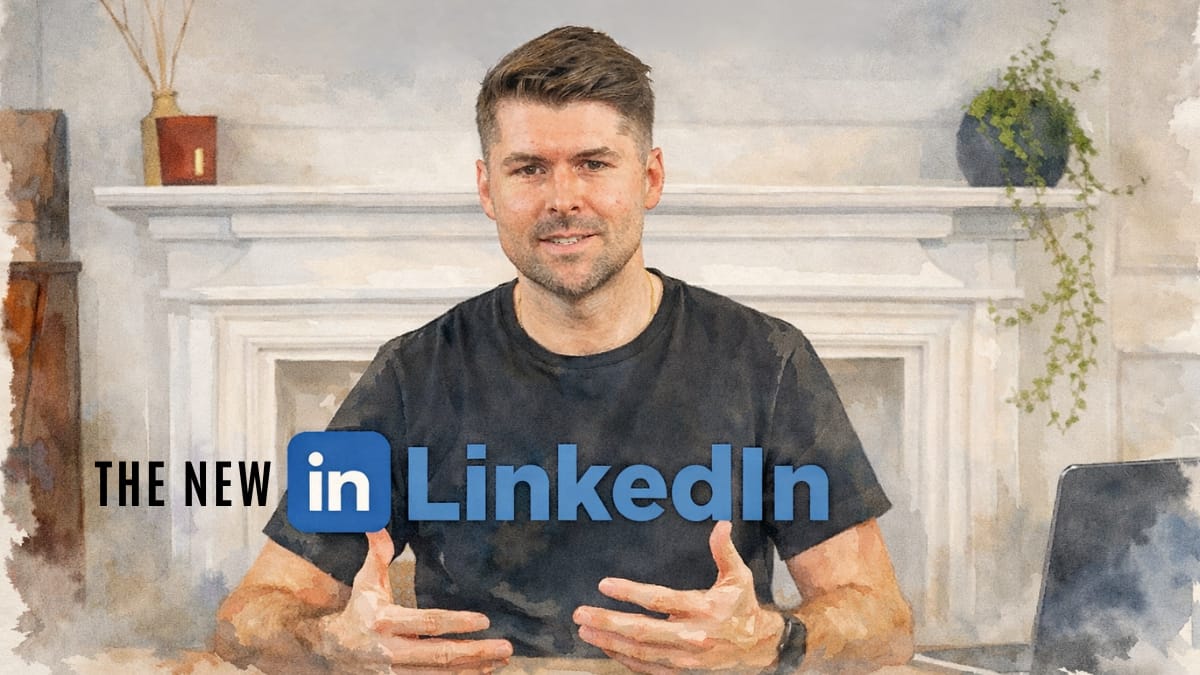
Six months ago, you could post almost anything on LinkedIn and get reach.
A quote. A generic insight. Even recycled advice.
Today? That same content gets ignored.
Not because LinkedIn is broken. Because the algorithm evolved. And if you don't evolve with it, your growth will stall.
Chris Donnelly recently broke down what's actually working on LinkedIn in 2026, and his insights align almost perfectly with what I've been teaching in Synergy. The difference is that Chris is watching the same patterns from a different vantage point, and his validation of these strategies is worth paying attention to.
Here are the key shifts you need to understand.
The Algorithm Now Reads Your Content
LinkedIn replaced its old recommendation system with a semantic AI model called 360Brew. This is the shift I wrote about in Chapter 16 of Synergy, and Chris confirms it's now the dominant factor in content distribution.
The old algorithm tracked clicks and predicted engagement based on what similar users clicked before. The new algorithm actually reads your content. It understands meaning, relevance, and context. It evaluates whether your post delivers real value before anyone even sees it.
What this means in practice: you can't hack reach anymore. Your content must match your profile, your expertise, and your audience. If there's a disconnect, you won't get distribution.
The algorithm used to ask, "Will this person click on this?" Now it asks, "Is this content actually worth showing to this person?" That's a massive difference.
Topical Consistency Is Now Required
One of the biggest mistakes creators make is posting about everything. Chris emphasizes what I call the Content Pillars approach: 80% of your content should live within three core topics.
Why? Because the algorithm needs clarity. If you're a marketing consultant, talk about marketing, funnels, and growth. If you're a founder, talk about scaling, hiring, and operations. Not random motivation. Not viral fluff.
The algorithm builds a profile of what you're known for over time. The more consistently you show up with aligned content, the more it trusts you. Jump around randomly and you confuse the prediction engine.
Consistency equals credibility to both humans and AI.
Your Hook Must Signal Value, Not Just Curiosity
The algorithm now heavily prioritizes the first one to two sentences of your post. Weak hook means no reach. Strong hook means exponential reach.
But here's where Chris's insight aligns with what I've been teaching about cognitive hooks versus curiosity gaps. The old advice was to create curiosity gaps: "You won't believe what happened next." That triggers a reflexive response, but curiosity gaps lack semantic density. The algorithm sees a hook with no substance behind it.
A cognitive hook is different. "Here's the three-part framework for building a high-trust LinkedIn profile." That signals specific intent. It tells the algorithm this post contains value worth processing.
Bad: "Some thoughts on marketing..."
Good: "Most founders are wasting 80% of their marketing budget. Here's why."
Saves Are the New Priority Signal
LinkedIn's priority signal has shifted. Saves now rank higher than likes, which rank higher than comments. Why? Because saves signal real value. Someone is saying, "I need to come back to this later."
This validates what I've been teaching about Cheat Sheets and Visual Carousels. These formats consistently outperform because they're designed to be saved. Frameworks, playbooks, step-by-step guides. Content people reference, not just scroll past.
Ask yourself before you hit post: "Would someone come back to this later?" If the answer is no, you're creating content for attention, not value. Value is the new virality.
Note: Encourage your readers to save your posts.
Your Profile Is Now a Landing Page
Your content doesn't exist in isolation. The algorithm checks whether your content matches your profile. This is exactly why the Profile-as-a-Pitch framework matters more than ever.
Your profile must clearly answer three questions: Who do you help? What problem do you solve? What transformation do you deliver?
Bad: "Entrepreneur | Thinker | Builder"
Good: "I help B2B founders generate inbound leads through LinkedIn content"
If your profile is unclear, your reach suffers. The algorithm can't figure out who to show your content to.
Carousels and Infographics Are Dominating
Not all content formats are equal anymore. Chris confirms what my own data has shown: carousels and infographics are the top-performing formats right now.
The key insight is that carousels convert best into followers. Why? They increase time spent on the post, encourage saves, and deliver structured value. Each slide is a micro-commitment that builds toward a larger payoff.
If you're serious about growth, start turning your ideas into visual frameworks. This is the exact strategy I've been teaching with the Content Pillars approach. Take one pillar, break it into a step-by-step process, and make it visual.
Education Beats Personality
This is where most people get it wrong. They think, "I need to share my story to grow." Chris argues the opposite: education beats personality.
People follow value. The best creators package knowledge into frameworks, turn expertise into systems, and make ideas actionable. Think of Simon Sinek with "Start With Why" or James Clear with "Atomic Habits." They didn't invent new ideas. They packaged them better.
Personal stories have their place. But they should serve the education, not replace it. Lead with value. Use story to illustrate and connect. That's the formula.
Short, shallow content is dying. The algorithm now rewards longer posts, deeper insights, and more time spent reading.
Time equals signal of quality. If someone reads your post fully and engages deeply, LinkedIn pushes it further. This is why the 25K Rule matters more than ever. You're not trying to reach everyone. You're trying to reach the right people and keep them engaged.
Write for retention, not just reach. A post that thoroughly explains one concept will outperform a post that superficially touches ten concepts.
Build a System, Not Just Posts
Most creators post randomly. Chris emphasizes what I call the Creator's Funnel: a system that moves people from awareness to education to conversion.
Top of funnel: simple, engaging content that's easy to consume. Middle: frameworks, playbooks, deep insights. Bottom: case studies, testimonials, offers.
Not every post should sell. But every post should lead somewhere. This is where lead magnets come in. Templates, guides, tools. Something valuable enough that people will exchange their email for it.
The goal isn't followers. It's owned audience. Attention doesn't equal revenue. Your email list does.
Don't Depend on the Algorithm
Chris's final point is the most important: platforms change. Always.
This is why I've been teaching the One Platform, One Offer, One System framework. Yes, master LinkedIn. Yes, understand the algorithm. But build a newsletter. Own your audience. Create direct access.
Reach can disappear overnight. Email doesn't. The creators who win long-term are the ones who use LinkedIn to build something they own.
The Bottom Line
The LinkedIn game in 2026 is simple:
Be specific. Be valuable. Be consistent.
Stop creating content for attention. Start creating content people save.
The algorithm is reading. Make sure what it finds is worth amplifying.
Kevin Box is the author of Synergy: Thought Leadership, Strategic Partnerships, and Your LinkedIn Brand Engine — a comprehensive guide for coaches, consultants, and service providers building authority on LinkedIn.

Spots are Limited. Register Today!
Reply